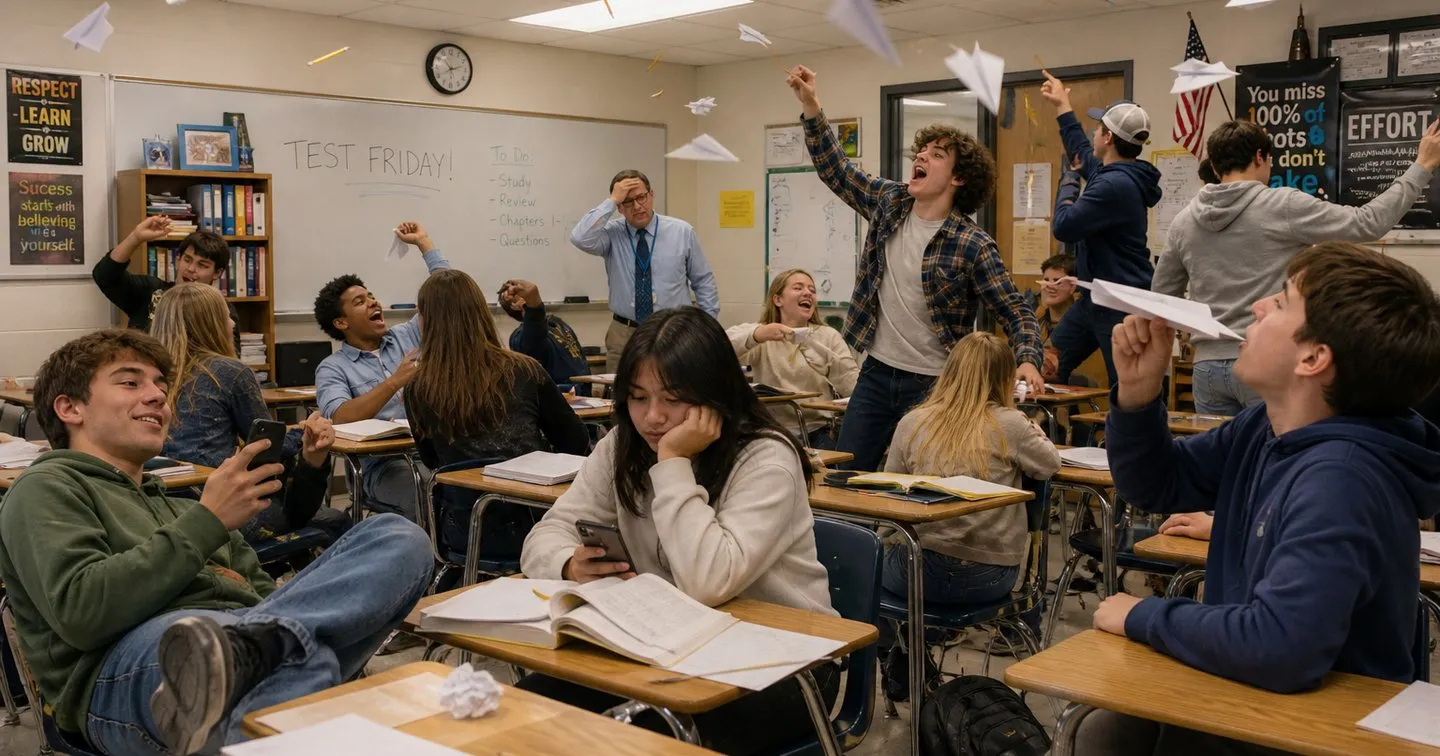

In this episode, I share why the month of May doesn't have to be an educational waste and why it shouldn't be for your own sanity.
It is vital that we have teachers who are personally prepared to teach personal finance or this movement to require it will flop dramatically! In this episode, Gabbi Cerezo and I talk about cultivating the mindset to teach personal finance and some practical strategies I’ve learned from teaching this year. If you’re on the docket to teach this class in the near future, you won’t want to miss it!
Show Notes
Budget Activity Spreadsheet
Recommended Books (Amazon Affiliate Links)
The Wealthy Teacher
Key Ideas
May has become a “lost month” in education—and how to take it back
To have a richer classroom know the difference between grades vs. actual learning (and why it matters)
You can teach financial literacy in any subject (math, English, science, history)
To enjoy May, design a “passion unit” that students remember years later
Engagement eliminates behavior problems better than discipline ever will
Creating a richer classroom leads to a richer life as a teacher
Bonus Tip
Here is a bonus tip I didn't get to in the episode.
If you aren’t enjoying your work life anymore, you may need to consider a change. A change of grade, a change of subject, a change of position, etc. Sometimes we just need novelty to recover. Don’t abandon the profession you love first, consider a “change of scenery” to have a richer classroom.
Transcript
Shaun Morgan
Welcome to the Teacher Money Show, the podcast dedicated to helping teachers navigate your unique financial challenges and unlock your financial superpowers. I'm your host, Shaun Morgan, a full-time educator and personal financial coach and speaker. And I'm here to help every teacher, whether you're a seasoned teacher looking for fresh insights or a new educator navigating your first paycheck to have a richer wallet, classroom, and life.
Shaun Morgan
I'm super excited to come on and talk to you just one-on-one today. We're going to talk about something we don't usually talk about, and that is how to have a richer classroom. I spend a lot of time talking about a richer wallet and some time talking about a richer life, but we don't usually talk about having a richer... classroom, at least not enough. And I just want to let you know that I already did this podcast today and found out when I finished that my son had clicked the mute button on my microphone, so none of it was recorded. So this is a take two. I hope that I can remember everything that I wanted to talk about instead of thinking that I already said it because I already said it once today. But let's dive right on in.
Shaun Morgan
Why am I talking about this on a personal finance podcast? Why is a richer classroom important? Well, I think the important thing to realize first is that personal finance is not about money, because money is not the end. Money is a means to the end. And while we talk about money a lot, because money touches so many parts of our lives, every part of our life, really. It's just the things that we learn from money that make our life better that really matters. As we apply personal finance principles, we will naturally have a richer classroom. Now, there are other ways to have a richer classroom besides learning about money, of course. But when we take the discipline it takes to save, invest, budget, pay off debt, and apply that to the rest of our life, we have a richer classroom. When we take the things that we learn about as we dive deep into our own personal financial situation and apply different books, podcasts, and ideas, things that we have learned into that situation, that knowledge application helps us grow and develop the way we think, and that creates a richer classroom. As we, you know, have our money solidly figured out, we feel more confident, and that leads to a richer classroom. Among many other areas of our lives, these things are not about the money. They are about... The life quality that we get from applying them, and they naturally make our classrooms better.
Shaun Morgan
Now that we have the foundation, the understanding of the purpose of this discussion, I want to talk to you specifically about how I think we can make our classrooms richer, especially in this last month of May. May has been a throwaway month for far too long. State testing usually wraps up in April, maybe early May, depending on where you are. And as state testing wraps up, we start to think to ourselves, well, I guess we're done. But the problem is we've conflated the measure of education with education itself. State testing is not the end-all, be-all of what we are trying to do. It is simply a measure of how our students are doing on their path to reaching a certain goal. A standard, right? Whether that's the standard of what they need to know to get into college, what they need to know to progress to the next grade level, what they need to know to do well on this test. That's all a state test is doing. Have they mastered that? And when we get to that point, and then we stop teaching after that, we're basically saying that what really matters is how well they do on the state test, not how much education they have. And I want to fix that. I want to stop that. I want to have a richer classroom environment where we take this last month and we make it one of the most meaningful months of our education, not a throwaway month.
Shaun Morgan
Throwaway month meaning we watch movies, do boring worksheets, or even fun worksheets, like a word search. I'm just going to get on a pet peeve, a soapbox of mine. Word searches are not teaching anyone anything. Maybe in the early grades, they're learning how to string words together. They're seeing patterns. That's good. But if you were doing a word search in 11th grade to teach physics vocabulary, it's a complete waste of time. Crosswords, maybe, because you're matching the definition with the word. But a word search is a waste of time. But we're pulling these things out with 11th grade. We're having them color pictures, whatever. That is not teaching those people anything. Yes, maybe a little bit in younger grades, but like third grade on, those things are not helping. They're not getting us closer to where we want to be, which is highly educated human beings. Okay, off a soapbox.
Shaun Morgan
That being said, we're doing all these things in our classrooms the last month that are just wasting time. We're getting from the end of state testing to the end of the school year so we can go on summer vacation. But that is not the way it should be. Now, the problem, I think. The reason why this has happened is because we don't really want to grade anything this last month. We've been doing such an intense push that we're kind of over the detailed intense grading and we think, I don't want to grade, so I'm not going to do anything to grade really. But not grading should not be equated to not learning because grades are only measuring that standard we were talking about. Grades are only measuring and communicating to the student, did you make it? Did you get to whatever standard we're holding you to? The standard of the next grade level, the standard of graduation and college, the standard of this state test. Whatever it is our grade system is based off of, we're communicating with an A, B, C, or D, or whatever. This is how you did compared to this standard. If state test. If grades went away, education would still exist. These things are shorthand measures that help us, but they are not education themselves. Can you imagine Aristotle giving Plato an A-? It just would not have happened. That's not the point of education. Grades are not the purpose. Learning, applying, thinking, these are the things that make education possible and worthwhile.
Shaun Morgan
So keep in mind that this last month, we do not need to grade things like crazy. In fact, the less we grade, the more meaningful the education will probably be because the student will not focus on the grade. They will focus on the learning. So that being said, how can we educate? How can we teach? How can we have a learning environment that isn't watching movies? That isn't chatting with friends, that isn't telling them, yeah, get on social media, whatever. That isn't coloring worksheets or just throwaway activities, but also not one that requires intense amounts of grading. Well, I have a few ideas for you.
Shaun Morgan
The first one, because this is a personal finance podcast, is bring personal finance into your discipline. There are personal finance connections in every discipline. Whether you are doing the actual mathematical formulas that make personal finance possible, whether you are reading a personal finance argument or article and then writing about it, whether you are doing an experiment. Instead of mixing chemicals and watching a reaction, doing an experiment on human behavior around finance or taking a data set from a previously done experiment and checking that data set. And running your own experiment based on that data set. There are ways that you can bring this into all of the major disciplines. Historically speaking, how have the incomes changed over time? How has the cost of living changed over time? How has that affected the way people perceive the country, the economy? There are ways to look at this in all the disciplines. So don't think that you can't bring personal finance in because, oh, I'm just the history teacher or whatever. There are ways to bring this into everything. And just imagine how exciting that would be to do a real experiment about something that they really interact with. Instead of doing, I don't know, like a chemical reaction of two highly volatile chemicals that they will never touch again in their life. Because how many people have access to pure sodium or whatever? And that's just a thing that's not going to apply to most of their lives, but money applies to their everyday life. And being able to do a human behavior experiment on that can be super impactful. But you don't have to grade it. You don't have to be like, well, we're going to do a 16-page report where you detail all these things. You just say, hey, let's work on this together. Let's, as a class, look at the data and discuss it. And how did this happen? And why did this go this way? And what can we infer? And just like work through an experiment together. And then you just base it off of, did you participate? You participated? Great. You get a point. You participate, you get a point. If you really feel like you need to hold them accountable with your grading. But the point is just engaging. It's something interesting.
Shaun Morgan
Okay, here's another idea. Read a book. Now, I do not mean deer programs, okay? Drop Everything and Read is, in my opinion, a monumental waste of time. deal. Period. In most instances. Why? I know this is probably triggering some of you. But do you know how many students I've seen looking at a book upside down for 15 minutes during Drop Everything and Read? It's not one, okay? There are many students who just don't. They would rather stare at the wall and watch the paint dry than read. And that's because they haven't seen reading as exciting. They need to feel like reading is an exciting thing to do. And by you reading to them, not having a YouTube video read to them, you reading to them, and being excited about it, they will see reading as something exciting. Now, what does this mean? Or what does it look like? You are reading out loud. You're doing voices. You're doing reactions. You are asking them questions, saying, why do you think they did that? Or what do think is going to happen next? Or, well, look at this. Why did this occur? What can we take away from that? Stopping and having discussion as you're going and doing it in your discipline, right? So, you know, people think of reading as being like the English teacher thing. Yeah, the English teacher can just grab any book and read it. Great. But it's important to do this across the board. So, you know, just going through each one, you know, English, grab a book, a great book, a book that has influenced your life that you're excited about. Start reading to them. Do not make them fill out worksheets about the rising action and the resolution and all that stuff. Just have them engage and pause and ask questions by cold calling so they know that they better be listening or they are going to be in trouble. That is the way that's going to get them to focus, engage, listen, and then you just are saying, were you there? Were you engaged? That's all you need to do. Easy, easy grading.
Shaun Morgan
Math. Find a math-related book, a math-related story. There are many that I can recommend. But one that just pops in my mind, Flatland. It's an older book, but it's about a, I believe he's a triangle. And then like the way that they, no, no, he's a circular object, but it's like not a perfect circle. He's got like a number of sides, like more than most, but not too many. And the more sides you have, the more like regal you are in this shaped society. And he describes like what it's like to be in the completely two-dimensional world. And then he goes down to the one-dimensional world and gets to like talk to the one-dimensional people and they don't believe him that he's two-dimensional. Then he goes to the three-dimensional world and he blows his mind because he can see, you know, the two-dimensional world from a different perspective. It's a really fun book. But the point is that that's something you could read in a math class and discuss why the perspective matters and how the angles and the shapes and things like that make a difference in this world that they're in. It can be a really fascinating thing to do. You know, science, I don't have like a specific science book that's popping into my head necessarily, but like, you know, Gulliver's Travels has a lot of the scientific type of discussion points, but you can also just like read the story of a scientist, like read about Benjamin Franklin and the kite, right? Or read about, you know, Galileo and the dropping of the ball thing. I don't know. I'm not great on the history of science, but the story part of it and how these things were discovered could be, you know, a fascinating story. Even though it's, you know, nonfiction, reading the stories could be really, really interesting and entertaining. Or, you know, I read a fascinating book about the discovery of the atomic bomb and all the scientists that got together for that. You know, that could be. Gripping tale in a science class. Now, I'm not sure if you have time for reading an entire book, but reading, you know, portions or segments even and engaging them with that can be huge. Okay.
Shaun Morgan
Another idea. Do that unit that you've always wanted to do that there's never time for. Now, this one might require a little bit more grading, but especially like that last week or two of school, not so much. You're just talking about something that's interesting. And when you're excited, they'll be excited. They'll be engaged. They'll want to be there. The way that I did this in my class is I lived in Fiji for two years. You see a tapa here from Fiji behind me. And I speak the language. I love the culture. So I was really interested. So for our specific unit in my world history class, we would get together and we'd talk about, you know, the general history of the area. And then I talk about Fiji and we get to sit on the floor like they would do in a Fijian classroom and I teach them words and we'd sing songs and we'd play Fijian games. And they would... We would get to engage in a new culture, okay? Not just like, oh, yeah, go on your phone, but we'd learn something by engaging in a different culture. So I'm not saying you can't do fun things, but do something educational that's fun, not just watching, I don't know, Frozen 2. My son came home from school and said, yeah, I already watched Frozen 2, and we were going to watch it as a family. I'm like, where? He's like, oh, yeah, just at school. We just watched it. They're like, why? There was no purpose behind it. It's just, you know, go watch this movie because it is the end of the year, right? So that is the type of thing that we want to avoid because, now here's the thing. Now, those are some ideas. There's lots more. If you have an idea of how you will engage and make something interesting that last month of school, please reach out. Shaun, S-H-A-U-N, at teachermoneyshow.com. I'd love to hear from you. I'd love to hear more ideas on this.
Shaun Morgan
But the point I'm making is, if you do this, you are going to have a better end of the school year. Because how many of us are just like, Oh, I just, just constantly managing behavior. The reason we're constantly managing behavior is that we are lowering expectations in the last month of school. Yes, they'll still have the I want to be on summer. But if you are engaging them in something active, something interesting, they are going to have less time to wonder, I wonder what happens if I grab my pencil and jam it into my friend's rib, right? When they're sitting there watching something they don't really want to watch because they got outvoted or everyone's just on a phone because, you know, we have free time or we're just doing this worksheet that's kind of boring. Like that's when behavior problems begin. That's when your rich classroom turns into a poor classroom, right? You can avoid that by engaging in something interesting. Now, are they going to love you? They're going to claim not to. They're going to say, I love the teacher who's just letting us do it like, oh, the other teacher is so great. They just let us on our phone the whole time. They claim to want that, but they don't. They actually don't want to just have no stress. It is not good for them. They know it. But the dopamine hit that comes from being on the phone makes them say, oh, why can't you just be more like the teacher that lets us do nothing? But what will happen is they might not claim to love you, but they will respect you. And that is what matters. They will respect you.
Shaun Morgan
So take this last month or so of school and create something exciting. Do something creative. Have them create something. Have them grow in the discipline in a way that's not, oh, I've got a huge project that has this many points. And if I don't do it, I'm going to fail. And it's such a big stressful thing to say, let's create. Let's do something exciting, interesting, fantastic. And as we do these things, as we have them engage, you will have a richer classroom. And as a result, you're going to have a richer life this last month because you will not be. I'm going to also offer you a challenge. Turn off all screens. Don't use screens to waste time. Don't PowerPoint them to death. Don't let them on their phones. Have them engage in the world in interesting and exciting ways this last month. Now, as you do this, as you build these relationships, as you connect with students, as you gain that respect, as you create a richer classroom, you will start to feel richer life. And remember, as a teacher, you are already rich. Your wallet just needs to catch up.